


Introduction
Modern kitchens are no longer just cooking spaces; they reflect lifestyle, efficiency, and design preferences.As homeowners move toward sleeker interiors, cabinet materials play a crucial role in shaping both functionality and aesthetics. PVC kitchen cabinet doors have emerged as a popular option in contemporary homes due to their clean finish and practical appeal.Their growing presence in modular kitchens highlights a shift toward materials that balance appearance with everyday usability.
PVC-based cabinetry is manufactured using polyvinyl chloride boards that are engineered specifically for interior applications.PVC kitchen cabinets are typically made from rigid PVC sheets that can be cut, shaped, and assembled into cabinet doors, shutters, and internal storage units. Unlike traditional wood-based materials, these cabinets are uniform in structure and do not rely on natural grains or fibers, making them suitable for controlled, factory-finished modular kitchen setups.
The increasing demand for modern kitchens has led homeowners to explore materials that offer consistency, durability, and ease of use. PVC kitchen cabinet doors are gaining traction because they align well with contemporary layouts while offering flexibility in styling. From smooth finishes to varied textures, PVC kitchen cabinet design options allow homeowners to create kitchens that feel modern without being overly complex to maintain.
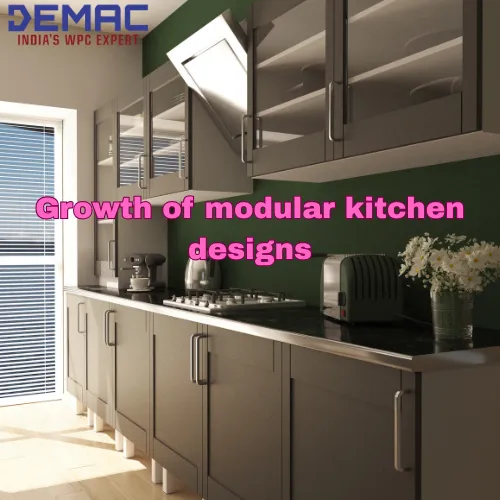
As modular kitchens become the preferred choice in urban homes, material compatibility has become essential. PVC kitchen cabinets integrate well into factory-made modules, ensuring uniform sizing and easy installation. With the rise of prefabricated layouts, modular kitchen PVC cabinets are often chosen for their lightweight nature and adaptability to different kitchen configurations.
Beyond convenience, modular kitchens also support better space planning and faster execution timelines. Since components are pre-measured and assembled with precision, installation errors are reduced, and future modifications become easier. This structured approach appeals to homeowners who value consistency, cleaner layouts, and the ability to upgrade individual sections without disrupting the entire kitchen setup.
Busy lifestyles have increased the need for kitchen materials that require minimal upkeep. When evaluating affordability, many homeowners compare options based on long-term value rather than just upfront expense. PVC kitchen cabinet price is often considered accessible when measured against durability and maintenance costs. Additionally, tPVC board material for kitchen cabinet construction does not demand polishing or special treatments, making it suitable for users seeking hassle-free solutions.
Another important factor influencing material choice is long-term ease of use. Homeowners increasingly prefer surfaces that can handle daily wear without constant attention or specialized cleaning products. Materials that resist stains, scratches, and discoloration help reduce recurring expenses, making them practical for families seeking a balance between everyday functionality and budget planning.
Kitchen environments are constantly exposed to moisture, spills, and temperature variations.This has led to a growing preference for cabinet materials that can handle such conditions without frequent repairs. PVC-based cabinets are commonly chosen in areas prone to humidity, as they help reduce concerns related to swelling, decay, or pest damage over time.
This shift is especially noticeable in apartments and homes located in coastal or high-humidity regions.In such environments, traditional materials may deteriorate faster due to prolonged exposure to damp conditions. Choosing cabinets that maintain their structure and appearance despite environmental stress helps homeowners avoid frequent replacements and ensures a more dependable kitchen setup over time.
PVC-based cabinetry has gained attention for offering practical advantages suited to modern kitchen environments.PVC kitchen cabinet doors are often selected by homeowners looking for materials that perform well under daily use while maintaining a neat, contemporary appearance.
Key benefits include:
Overall, these benefits make PVC cabinet doors a practical choice for kitchens that demand durability, safety, and low maintenance without compromising on modern design expectations.
Choosing the right cabinet material often involves comparing durability, appearance, and maintenance needs. PVC kitchen cabinets are frequently evaluated alongside traditional options to determine suitability for modern homes.
When comparing PVC kitchen cabinets vs wood, PVC is often chosen for its uniform surface and resistance to moisture. Wood continues to appeal for its natural grain and traditional aesthetic. However, wooden cabinets may require periodic polishing and added protection against humidity.PVC cabinets generally involve less maintenance in daily use.This makes them suitable for kitchens where ease of care is a priority.
In the case of PVC kitchen cabinets vs plywood, both materials are widely used in contemporary kitchen designs. PVC cabinets are typically preferred in moisture-prone areas due to their water-resistant nature. Plywood offers good structural strength but may need surface treatments for longevity. Cost, usage conditions, and maintenance expectations often influence this choice. Homeowners usually evaluate long-term performance before deciding between the two.
For modular kitchens, material compatibility is just as important as visual appeal.PVC kitchen cabinet doors fit well within modular systems due to their consistent thickness and ease of fabrication. In homes where moisture resistance is a priority, waterproof PVC kitchen cabinets are often considered a practical solution. While no single material suits every requirement, PVC-based doors are commonly selected for kitchens that prioritize low maintenance and modern styling.
Selecting the right PVC cabinets involves more than choosing a color or finish. Buyers should consider board density, surface quality, and edge finishing to ensure durability. Attention to manufacturing standards can directly influence PVC kitchen cabinet lifespan, making it important to choose boards that are designed specifically for interior cabinetry rather than general-purpose PVC sheets.
In addition, it is advisable to check for uniform thickness, smooth edges, and proper lamination before finalizing a purchase. Quality fittings and compatible hardware also play a role in overall performance, especially in modular setups. Choosing products from established manufacturers and verifying warranty details can further help ensure long-term reliability and consistent performance in everyday kitchen use.
When evaluating cabinet materials, brand quality can influence overall satisfaction.DEMACPVC boards are engineered to meet modern kitchen requirements while offering value-driven solutions. In terms of PVC kitchen cabinet price, these boards are positioned to balance affordability with performance. Their compatibility with contemporary layouts also supports the growing demand for modern PVC kitchen cabinets,making them a practical option for modular kitchen projects.
Choosing the right cabinet material is a key step in designing a functional and stylish kitchen. PVC kitchen cabinet doors offer a blend of durability, ease of maintenance, and modern appeal, making them a strong contender for today’s modular kitchen designs.
Ultimately, the best choice depends on individual needs such as usage patterns, budget, and environmental conditions. By understanding material properties and long-term performance factors, homeowners can make informed decisions. Reputed manufacturers like DEMAC offer PVC boards designed for consistency and reliability, helping users achieve kitchens that balance everyday convenience with long-lasting visual appeal.
Yes, they are commonly used in modular kitchens due to their uniform structure and ease of installation.
They are low-maintenance and moisture-resistant, though design options may be more limited compared to natural wood.
They generally perform better in humid conditions, while wood and plywood may require additional protection.
They are widely chosen for their resistance to moisture and pests, making them suitable for demanding kitchen environments.

© 2023 Demac Multiboard | Powered by Shaadow