


There was a time when refreshing a wall meant one of two things.New paint or a roll of wallpaper.That's not really where things stand anymore.More homeowners and designers want texture on their walls now,some actual depth and presence is what pushes Design Wall Panels into the spotlight.They also do something paint has never managed:take the daily bumps and scuffs so the wall underneath doesn't have to.
Walk into a hotel lobby or a restaurant or honestly just a friend's living room these days,and there's a decent chance you'll spot panelling somewhere.Materials, finishes,colours,patterns,the range is wide enough that you can go minimal and quiet or build a full statement wall and both are fair game.Panels are forgiving of a rough wall underneath too,which is handy,since not every surface is worth the cost of patching before a repaint.WPC Wall Panels especially have built a name for looking contemporary while holding up to daily use too.
Doesn't matter if it's a full interior overhaul or one feature wall.The panel design ends up shaping the room more than most people expect going in.
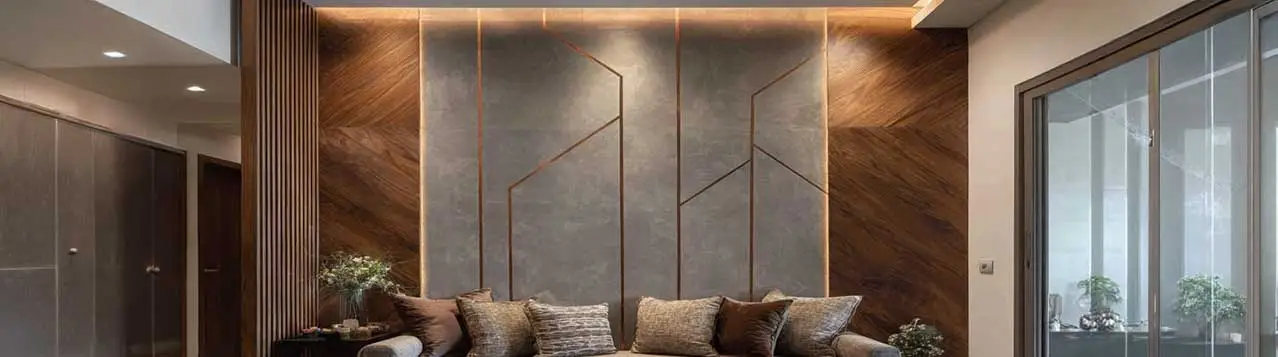
Factory-made panels, fitted over an existing wall,meant to change how it looks and often how it holds up too.Full wall,single section,ceiling,wrapped around some architectural detail,the application shifts depending on the space.
Materials vary a fair bit, ranging from WPC and PVC through to MDF,natural or engineered wood,and laminate.Panels are quietly doing protective work too, shielding the wall from daily wear and keeping the finish steady over time.
Contemporary interiors have taken to WPC Wall Panels in a big way.Flexible on design, reasonably moisture-resistant,low effort to maintain,that combination works in homes and in a good number of commercial spaces.Specs vary product to product,though,so it pays to check before assuming one supplier's version behaves like another's.
What's The Actual Appeal?
Not just looks, though looks are obviously part of it.
A plain wall turns into something closer to a feature almost overnight,without needing much decorative effort.Colours,textures,patterns,finishes,there's enough choice on the market that whatever mood you're going for,something out there probably matches it.That panel layer protects the wall from scuffs and marks along the way, and cleaning it tends to be simpler than scrubbing a heavily textured painted surface that's started showing its age.Rooms transform fast with panelling too, which beats the mess of rebuilding a wall from scratch.None of this is limited to one type of room either.
A Few Ideas Worth Trying
Covering an entire wall isn't a requirement.One section, done well, can outperform full coverage by a wide margin.
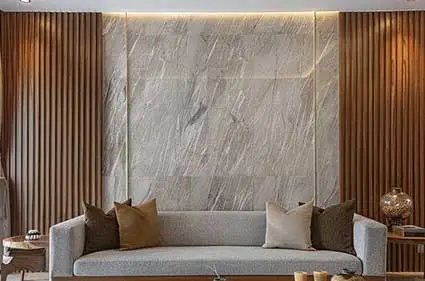
Fluted panels bring vertical grooves that give a wall rhythm, and a bit of shadow play depending on the light.Works well behind television units,beds,reception desks, basically anywhere that could use a focal point.
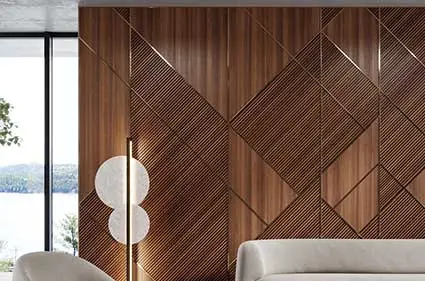
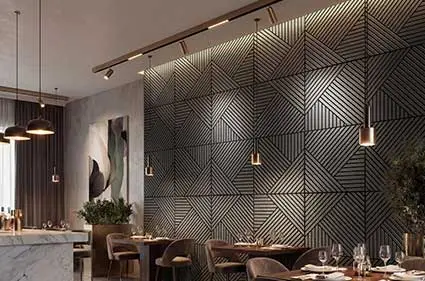
Geometric layouts lean contemporary almost automatically. Lines, squares, rectangles, abstract shapes, arranged with some intent and suddenly modern furniture and lighting feel like they belong together instead of sitting in the same room by coincidence.
A Wooden Wall Panel Design brings warmth into spaces that might otherwise feel a little cold. Wood tones sit nicely next to neutral walls, stone, contemporary furniture, and the contrast usually flatters the room rather than fighting it.
Textured feature walls add depth without much decorative effort beyond the panel itself. Throw in some accent lighting and the effect basically doubles.
And for anyone who'd rather keep things quiet, minimalist panels in neutral tones bring in subtle texture while the room still reads clean, not busy. Modern apartments and professional spaces tend to suit this especially well. Places where calm matters more than drama.
Matching The Design To The Space
Same material, completely different read, depending on where it lands.
Wall Panel Design for Living Room spaces usually centres on one focal wall. Behind the television, the sofa, a display unit, wherever the eye already goes. Fluted textures, wood finishes, geometric patterns, all can work and picking between them comes down to what's already in the room. One panelled wall instead of four keeps attention on a single area while the rest of the space stays visually settled.
A Bedroom Wall Panel Design usually goes behind the bed, which is often the plainest wall in the room anyway and could use the character. Wood textures, soft neutral shades, vertically grooved panels, any of these build a backdrop that calms the room down instead of overwhelming it. Coordinate it with bedside furniture and wardrobes and suddenly the whole room feels planned rather than pieced together.
Offices use panels in reception areas, meeting rooms, workspaces, corridors and a decent design choice quietly reinforces how professional the space feels, usually without anyone consciously clocking why. Hotels, restaurants, retail stores follow similar logic. Memorable interiors, sure, but also protection for the walls that take the most contact.
Decorative Interior Wall Panels tend to show up around entrances, staircases, dining areas. The spots people pause in, which is exactly why a small design change gets noticed there.
Why WPC Wall Panels Get So Much Attention
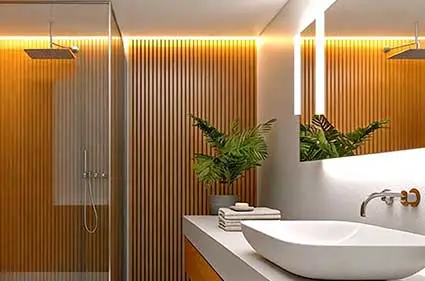
WPC Wall Panels blend wood fibres or other wood-based material, with polymer components. What you get looks and feels close to real wood but carries the practical upside of composite construction.
Design versatility might be the strongest card here. Enough textures, colours and profiles exist within the category to suit a stripped-back minimalist room just as well as something layered and elaborate.
Moisture resistance counts as a real strength too, though how well a given panel handles it comes down to the product and the installation.
One thing to keep in mind: not every panel marketed as water-resistant behaves the same once it's up on a wall. Waterproof Wall Panels need checking against their actual technical specs rather than assumed safe by default. Installation method and the manufacturer's own guidance both shape how the panel performs once it's living in a humid space day to day.
Anyone weighing style against long-term durability owes it to themselves to give WPC a proper look before defaulting to the usual finishes.
Start with the room. Not the pattern book.
Size, lighting, existing furniture, colour palette, how the space gets used day to day, all of it should shape the decision before any sample gets ordered. Smaller rooms generally do better with lighter colours and subtler textures, since a heavy pattern in a tight space can make the walls feel closer than they are. Bigger rooms get more room to play. Bolder patterns, darker tones, a full feature wall if that's the direction.
The material needs to suit the room's actual conditions too. Anywhere dealing with moisture or frequent contact needs a finish picked for durability first and looks second, not the other way round.
Consider whatever interior style is already in play too.A minimalist home usually suits simple vertical textures better than anything busy, while an industrial-style space can carry darker finishes or bolder geometric patterns without looking out of place.
Paint is still the fastest way to finish a wall. Wallpaper brings colour and pattern without much fuss either. Neither gives you the structured, tactile surface panels brought into a room, though. Decorative Wall Panels add a dimensional quality a flat painted or papered wall just can't fake.
Traditional finishes tend to demand more upkeep over the years too. Repainting scuffed sections, patching marks, redoing patches that wore faster than the rest. Panels, depending on material, often hold up longer with less fuss required.
None of that makes panels the automatic right answer everywhere, to be fair. It comes down to the room, the budget, the look and how much maintenance anyone's actually willing to keep up with. But for real architectural depth, panels usually deliver more visual payoff than paint ever will.
Dust the surface routinely. A soft cloth handles it most of the time or whatever method the manufacturer recommends for that particular material. Stains or marks generally lift with a mild cleaning solution, as long as it's approved for the panel type.Skip anything abrasive, skip harsh chemicals, unless the product instructions specifically allow it, and keep excess moisture well away from panels that weren't built for wet conditions.
Check joints,edges, and installation points every so often too, not obsessively, just enough to catch a loose panel or a damp patch before it becomes a bigger problem. WPC behaves differently from PVC, which behaves differently from MDF, wood or laminate, so the manufacturer's own care instructions will always beat a generic routine borrowed from a different material.
Choosing panels well means looking past appearance,into material performance,the range of design options, how installation plays out on site,and what maintenance looks like years down the road.
DEMAC Multiboard Wall Panels fit naturally into projects where designers and homeowners want a coordinated wall treatment but also want room to explore different decorative directions.The right pick comes back to the space itself in the end.
A pre-manufactured wall covering built to add a decorative or functional finish to an interior surface,usually made from WPC,PVC,MDF, wood or laminate.
Mostly, yes, across a pretty wide range of applications.Still worth checking the specific product's recommended installation conditions before committing to anything. The sheer variety of textures and finishes available makes them a solid fit for most contemporary spaces.
No single right answer here. Depends on the room's size, whatever furniture's already there,and the style being chased, but fluted, wooden, geometric and minimalist panels have all proven themselves as feature-wall treatments in real projects.
Some genuinely offer strong moisture resistance.That's not universal,though,and no panel should be treated as waterproof without checking the manufacturer's specs first, especially anywhere prone to dampness.
They do. A feature wall behind the bed, done in a fitting Interior Wall Panel Design, adds texture and visual interest without needing much else around it.
And upkeep? Regular dusting plus the occasional clean with a suitable product covers most of it. Skip anything abrasive, stick to whatever the manufacturer specifies for that material,and there isn't much more to it than that.
Design Wall Panels offer a genuinely simple way to bring texture,character,and real depth into a room.Decorative Wall Panels,wood-inspired finishes,Wall Cladding Panels,versatile Modern Wall Panel Design options,there's enough range here to suit almost any preference or project someone might have in mind.

© 2023 Demac Multiboard | Powered by Shaadow